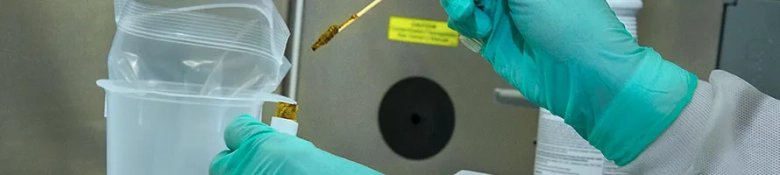
Medical laboratory scientist

Job description

Medical laboratory scientists, also known as biomedical scientists are involved in lab-based tasks such as sampling, testing and measuring in the field of medicine. They study samples obtained from the human body. The outcomes of their research inform medical practice and procedure and can help to tackle major diseases.

In small laboratories they perform many types of tests, whereas those in large hospital laboratories generally specialise on one of the following medical laboratory sciences:

Work activities

Work conditions

Travel: not normally part of the working day.
Working hours: can involve shift work, evenings, weekends and on-call work.
Location: mainly in large towns or cities throughout the country.
Opportunities for self-employment: unlikely.

Typical employers

Medical laboratory scientists work in a variety of settings including diagnostic laboratories and pathology departments in public voluntary hospitals and private hospitals as well as the Irish Blood Transfusion Service in Ireland. Other employers include pharmaceutical companies, independent laboratories, universities, medical schools and research institutes, and government agencies such as the Health Protection Surveillance Centre (Ireland) and the Health Protection Agency (UK).

Career development

Long term prospects include laboratory management, research and teaching.

Salaries

Republic of Ireland: Medical Scientists earn €33.000–€50,400 with chief medical scientists earning in excess of €75,000.

Entry requirements and training

Membership or eligibility for membership of the Academy of Medical Laboratory Science (AMLS) is a requirement to practice in the profession in Ireland.

Specific degree subjects required

An honours degree in a science course approved by the AMLS is essential. The course must contain a significant biomedical science component.
In addition to academic qualifications, candidates also need at least one year's structured training in a suitable medical laboratory in order to get eligibility for membership of the AMLS.

Entry in the UK is restricted to those holding a degree validated by the Institute of Biomedical Science (IBMS). In addition, in-service training in an approved laboratory is required for state registration.

Postgraduate study

A pre-entry postgraduate qualification is not a requirement for entry level posts. Applicants for senior roles will be expected to hold postgraduate qualifications.

Specific entry requirements

Republic of Ireland: In addition to academic qualifications, at least one year's structured training in a suitable medical laboratory is required in order to get eligibility for membership of either the AMLS and IBMS.

UK: In order to practice in the UK as a biomedical scientist, you must be registered with the Health Professions Council.

Skills and qualities

Further information

Labour market information

Medical Scientists are included on the list of strategically important occupations for the granting of Green Cards indicating that there may still be a skills shortage in this area.

Website carrying job advertisements

www.careersinhealthcare.ie
www.healthcarejobs.ie
diagnostics.ie
alliedhealth.ie
www.labmedrecruit.ie
microbiology.ie
www.nhscareers.nhs.uk

Professional bodies

Academy of Medical Laboratory Science
Medical Laboratory Science Association
Institute of Biomedical Science (IBMS)
Health Professions Council

Further sources of information

Blood Transfusion Board
Bioscience at work